
Set up a Print on Demand Business in the UK

Updated on:
Set up a Print on Demand Business in the UK: A Complete Guide for Entrepreneurs in 2026
Print on demand offers UK entrepreneurs a straightforward path to launching an online business without managing inventory or upfront stock purchases. Starting a print-on-demand business in the UK typically requires £100 to £1,000 in initial costs, depending on your website scale, design approach, and material quality. This business model allows you to sell custom products that are manufactured only after a customer places an order.
The UK market presents specific opportunities for print on demand sellers, from local supplier networks to integration with popular e-commerce platforms. You'll need to make several key decisions before launching, including choosing your niche, selecting reliable suppliers, and determining which products align with your target audience.
This guide walks you through the essential steps to establish your print on demand business in the UK. You'll learn how the business model works, how to identify profitable product categories, and the practical requirements for setting up your operation whilst creating designs and developing marketing strategies that drive sales.
Understanding the Print On Demand Business Model
The print-on-demand business model eliminates traditional inventory requirements by producing custom products only after customers place orders, creating a low barrier to entry for entrepreneurs whilst presenting specific profit margin considerations.
What Is Print On Demand?
Print on demand is a fulfilment method where you sell custom products without holding any physical stock. When a customer purchases an item from your store, a third-party supplier prints your design on the product, packages it, and ships it directly to the buyer.
This print-on-demand business model differs fundamentally from traditional retail. You don't need to invest in bulk inventory, rent warehouse space, or manage shipping logistics yourself. The POD business approach allows you to focus on creating designs and marketing whilst your supplier handles production and order fulfilment.
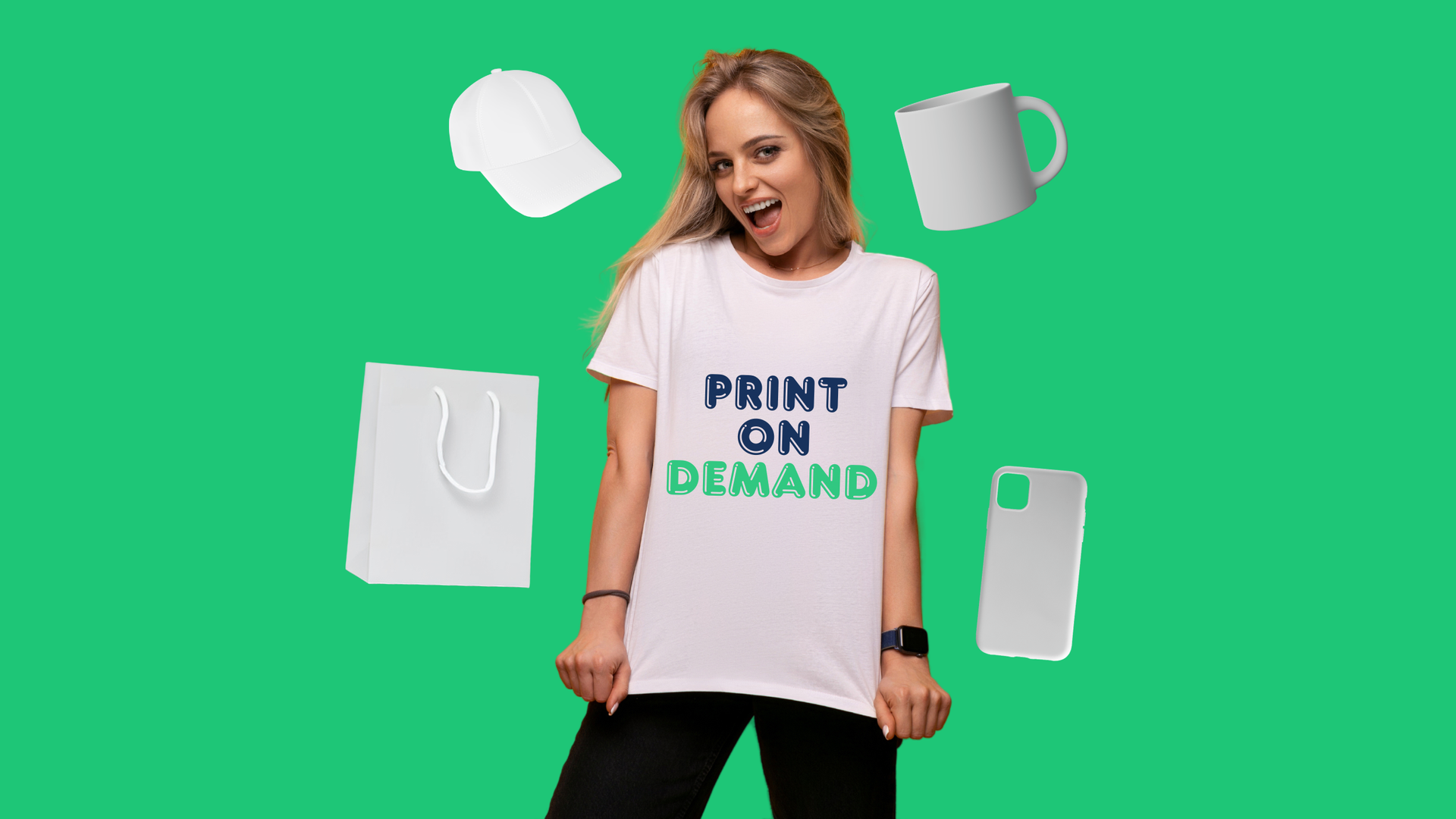
Popular print-on-demand products include t-shirts, hoodies, mugs, phone cases, tote bags, and wall art. You can apply your unique designs to these items and sell them through your online shop.
How the Print On Demand Process Works
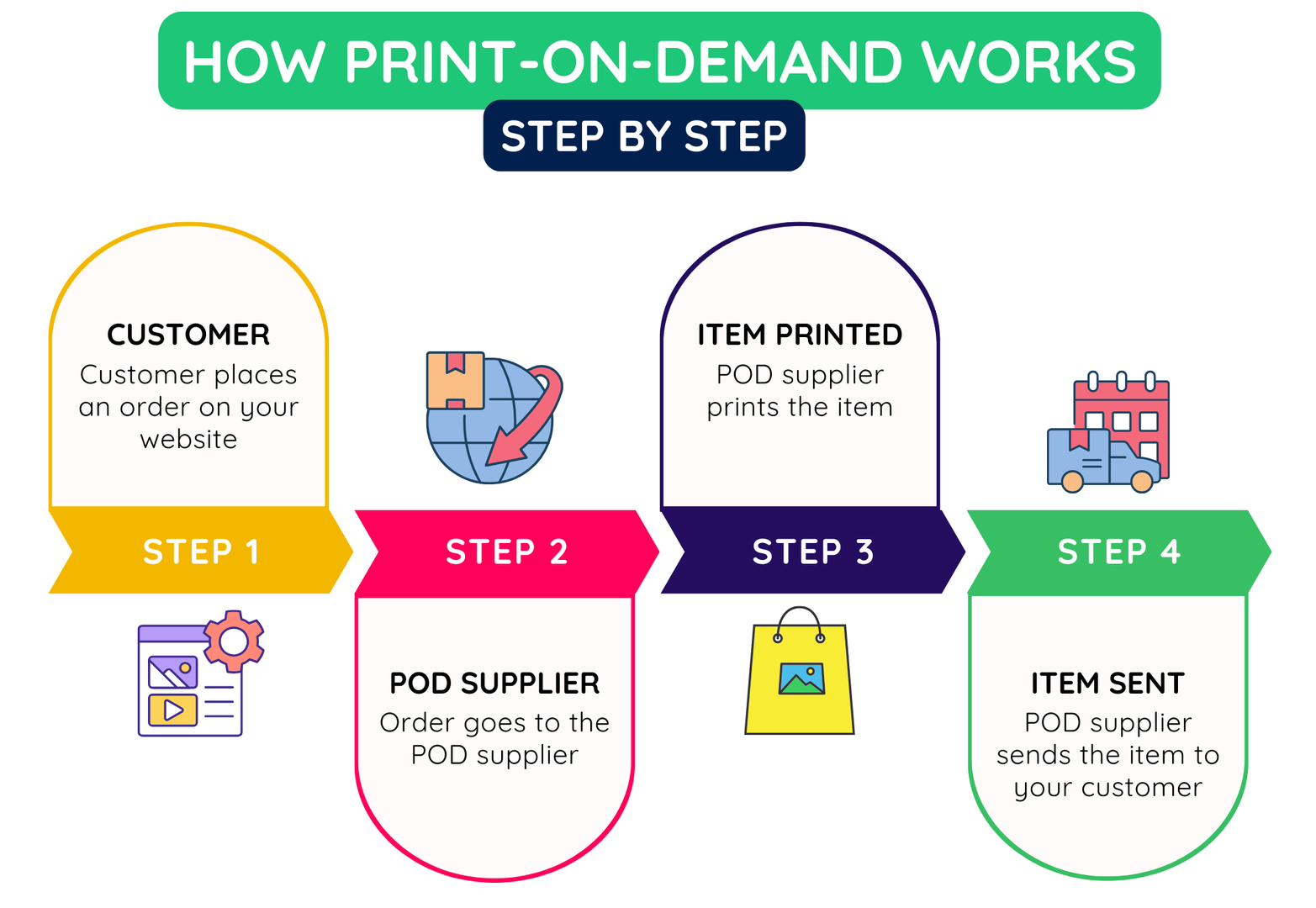
The process begins when you choose a POD supplier and connect their platform to your online shop. You upload your designs, select which products to offer, and set your retail prices.
When a customer orders from your shop, the order automatically transfers to your POD supplier. They print your design on the chosen product, handle quality checks, and ship the item directly to your customer. You pay the base product cost plus printing fees, keeping the difference as profit.
The typical workflow includes:
- Customer places order on your website
- Order details sent to POD supplier automatically
- Supplier produces item with your design
- Product shipped directly to customer
- You receive payment minus production costs
You never touch the physical products, and your supplier manages the entire production and shipping process.
Key Benefits and Challenges
The low barrier to entry makes POD accessible since you don't need significant upfront investment. You operate with no inventory risk, pay only when you make sales, and can test multiple designs without financial commitment.
Main advantages include:
- Minimal startup costs
- No warehouse or storage needs
- Ability to offer wide product ranges
- Easy to scale up or down
- Global shipping handled by suppliers
However, profit margins tend to be lower than traditional retail since suppliers charge for production, printing, and shipping per order. You have less control over product quality and delivery times since third parties handle these aspects. Competition is intense, making it harder to stand out without unique designs or effective marketing strategies.
Defining Your Niche and Product Strategy
Success in print-on-demand hinges on identifying a specific market segment and selecting products that resonate with your target audience. The right combination of niche focus and product selection sets the foundation for profitability and sustainable growth.
Conducting Market Research
Market research reveals what potential customers want before you invest time in designs or marketing. Start by exploring public forums like Reddit and Quora to identify common problems and desires within communities that interest you.
Facebook themed groups provide direct access to conversations about specific hobbies, interests, and needs. Join groups related to potential niches and observe what members discuss, share, and complain about. Pay attention to recurring themes and unmet demands.
Google Trends shows search volume patterns over time for different product categories and topics. This data helps you understand whether interest in a niche is growing, stable, or declining. Look for consistent or rising trends rather than short-lived fads.
Analyse competitor stores selling print-on-demand products to identify gaps in their offerings. Note which products receive positive reviews and which designs generate the most engagement on social media platforms.
Choosing a Profitable Niche
Choosing a niche is one of the most important steps in starting a successful print-on-demand business. A niche market allows you to focus on a specific segment rather than competing with established brands across broad categories.
Consider your own interests and expertise when selecting a niche. Your knowledge of a particular community or subject helps you create unique designs that genuinely appeal to that audience. Passion for the topic also sustains motivation during challenging phases.
Evaluate potential niches based on these criteria:
- Audience size : Large enough to generate consistent sales but not so broad that competition is overwhelming
- Purchase intent : The audience regularly buys products related to their interests
- Underserved demand : Limited high-quality options currently available
- Profit margins : Products command prices that cover costs and generate worthwhile returns
Pet owners, fitness enthusiasts, specific professional groups, and hobbyist communities often represent viable niches. Find your niche by researching what problems people in these communities need solved.
Product Selection and Trends
Product selection determines which print-on-demand products you offer within your chosen niche. Popular categories include wall art, hoodies, mugs, accessories, and posters. Each product type serves different purposes and price points.
Start with 3-5 core products rather than overwhelming yourself with an extensive catalogue. T-shirts and hoodies work well for fashion-focused niches, whilst mugs and wall art suit gift buyers and home décor enthusiasts. Consider customisable products that allow customers to personalise items with names or dates.
Eco-friendly products increasingly appeal to environmentally conscious consumers. Organic cotton apparel, recycled materials, and sustainable packaging options differentiate your brand and attract this growing segment.
Bundle deals combining complementary items increase average order values. A mug paired with matching coasters or a hoodie with a coordinating tote bag encourages larger purchases.
Monitor emerging trends through social media platforms like TikTok, Instagram, and Pinterest. However, balance trending items with evergreen products that maintain steady demand throughout the year. This approach provides stability whilst capitalising on timely opportunities.
Setting Up Your Print On Demand Business in the UK
The foundation of a successful print-on-demand business relies on choosing the right print provider and ecommerce platform, then optimising your online store for conversions. Your selection of suppliers and sales channels will directly impact product quality, shipping times, and profit margins.
Selecting a Print-On-Demand Partner
Your print-on-demand partner handles production, packaging, and shipping, so this decision affects every aspect of your business. Look for suppliers that offer competitive base prices, quality products, and reliable fulfilment services.
Key factors include product catalogue variety, printing techniques available, and geographic location of production facilities. UK-based print providers typically offer faster shipping to British customers compared to overseas suppliers.
Evaluate each print-on-demand service based on:
- Base product costs and shipping fees
- Product quality through sample orders
- Integration options with your chosen ecommerce platform
- Production and shipping times to your target market
- Customer support responsiveness and availability
Order samples from multiple print-on-demand suppliers before committing. This allows you to assess print quality, material durability, and packaging presentation firsthand.
Print on Demand Suppliers in the UK for Beginners
Several print on demand suppliers cater specifically to UK entrepreneurs.
Printify connects you with multiple print providers through a single platform, offering competitive pricing and wide product selection.
Printful provides end-to-end fulfilment with UK warehousing options and integrates seamlessly with major ecommerce platforms. The service includes mockup generators and branded packaging options for professional presentation.
Gelato operates a global network with European production facilities, ensuring fast delivery across the UK. Their local printing approach reduces shipping costs and environmental impact.
Teemill focuses on sustainable production using renewable energy and organic materials. The platform includes built-in store creation tools, making it suitable for complete beginners.
Inkthreadable is a UK-based supplier specialising in clothing and accessories with no minimum order requirements. They offer competitive pricing for European sellers.
Redbubble functions as both a print provider and online marketplace, allowing you to list products on their platform without creating your own store.
Choosing an Ecommerce Platform
Your ecommerce platform serves as the foundation for your print-on-demand store. Shopify remains the most popular choice, offering extensive app integrations and user-friendly store management tools.
WooCommerce transforms WordPress websites into fully functional ecommerce stores. This option provides maximum customisation but requires more technical knowledge than hosted platforms.
BigCommerce delivers enterprise-level features without transaction fees, making it cost-effective as your business scales. The platform includes built-in SEO tools and multi-channel selling capabilities.
Online marketplaces like Etsy and eBay allow you to reach established audiences without building your own website. An Etsy shop works particularly well for custom merchandise and artistic designs.
Consider starting with one platform and expanding to multiple sales channels once you establish consistent sales. Many print-on-demand suppliers integrate with several ecommerce platforms simultaneously.
Store Setup and Optimisation
Begin by selecting a memorable domain name and professional theme that reflects your brand identity. Your online store should load quickly, display products clearly, and provide straightforward navigation.
Product listings require high-quality mockup images, detailed descriptions, and accurate sizing information. Include multiple angles and lifestyle images showing your custom merchandise in real-world contexts.
Pricing strategy should account for cost compondents:
Base product cost – From your print provider
Shipping fees – Domestic and international
Platform fees – Monthly subscriptions and transaction charges
Profit margin – Typically 30–50% for sustainable growth
Marketing budget – Customer acquisition costs
Configure payment gateways to accept major credit cards and digital wallets. Enable guest checkout to reduce cart abandonment rates.
Set clear shipping policies, return procedures, and delivery timeframes on dedicated pages. Transparency builds customer trust and reduces support enquiries.
Install analytics tracking to monitor visitor behaviour, conversion rates, and popular products. This data informs future design decisions and marketing efforts.
Design Creation, Pricing, and Marketing Strategies
Success in print-on-demand requires compelling designs that resonate with your audience, competitive pricing that accounts for all costs, and strategic marketing to build brand awareness and drive consistent sales.
Developing Unique Product Designs
You can create designs yourself using design software like Adobe Illustrator or Photoshop if you have the skills. Free design tools such as Canva offer templates and user-friendly interfaces for DIY designs, making them accessible even without professional experience.
If you prefer to outsource, platforms like Fiverr and Upwork connect you with freelance designers who can produce custom designs based on your brief. This approach saves time and often delivers professional results quickly.
Before launching, use a mockup generator to visualise how your designs will appear on products. Most print-on-demand platforms provide built-in mockup tools that automatically display your artwork on t-shirts, mugs, or other items. Order samples of your products to assess print quality, colour accuracy, and overall finish. Product samples help you identify any issues before customers receive them and provide authentic photos for your listings.
Crafting Compelling Listings and Pricing
Your product descriptions should highlight unique features, materials, and sizing information whilst incorporating relevant keywords. Conduct keyword research using Google Trends, Ahrefs, or SEMrush to identify terms your target audience searches for when looking to sell custom products.
Your pricing strategy must cover production costs, shipping costs, platform fees, and your desired profit margin. Consider offering free shipping by building the cost into your product price, as this often increases conversion rates. Review competitor pricing to position yourself appropriately within your niche.
Test different branding options such as custom packaging or branded labels to enhance the customer experience and encourage repeat purchases. Include size charts and care instructions in your listings to reduce returns and support enquiries.
Building Your Brand and Driving Sales
A comprehensive marketing strategy combines multiple channels to reach your audience. Content marketing through blog posts, videos, or social media builds authority and attracts organic traffic. Email marketing allows you to nurture relationships, announce new products, and offer exclusive discounts to existing customers.
Paid ads through Google Ads or social media platforms can generate immediate traffic, though they require budget and testing. Start with small campaigns, analyse performance, and scale what works.
Social media platforms offer opportunities for organic growth through consistent posting and engagement. Run giveaways to increase followers and brand awareness. Focus on creating content that showcases your products in real-life settings rather than just mockups.
Prioritise order fulfilment reliability by choosing reputable print-on-demand partners with good reviews. A positive customer experience leads to repeat purchases and word-of-mouth recommendations, which are invaluable for long-term growth.
Our Experience
We’ve worked with clients running print-on-demand businesses across a range of niches, and in most cases it starts off as a simple idea but quickly becomes more structured.
The stores that tend to do best are not always the ones with the most complex designs, but the ones with a clear niche and a consistent approach. Understanding your audience, keeping your product range focused, and building a recognisable brand often makes a bigger difference than trying to follow every new trend.
One practical point we see regularly is that margins can be tighter than expected, especially once advertising and platform costs are factored in. Those who treat it as a proper business from the outset, rather than a quick win, are generally in a stronger position to grow it over time.
Tax Considerations
Income from a print-on-demand business is typically treated as trading income in the UK, meaning it falls within the scope of self-employment for tax purposes.
If you are generating income from POD, even on a part-time basis, you may need to register for Self Assessment and report your earnings to HMRC. There is a £1,000 trading allowance available, so smaller or occasional sales may not need to be declared, but once your income exceeds this level, reporting is usually required.
It is also important to keep records of your income and expenses, including platform fees, design costs, and advertising spend, as these can often be deducted when calculating your taxable profit.
If you are unsure how your print-on-demand activity should be treated, or you want to make sure everything is set up correctly from the start, it is worth getting advice early.
If you would like help, feel free to book a free consultation with us.
Looking for a
New Accountant?
Starting a business, or feel your current accountant isn’t proactive?
👉 Book a
free, no-obligation consultation
SHARE THIS ARTICLE
Recent Side Hustle Articles










Disclaimer: This blog is for general purpose guidance, and no liability is accepted by TaxStore for action taken or not taken in reliance upon the contents of this blog. Where appropriate, professional advice should be obtained.
🔒 Get more with TaxStore.
As a TaxStore client, you get access to:
✔
A dedicated team of chartered accountants to support you
✔ Step-by-step guides and checklists
✔
Tools and calculators
✔
Secure document sharing and approvals
All in one place. Online and in-store.