
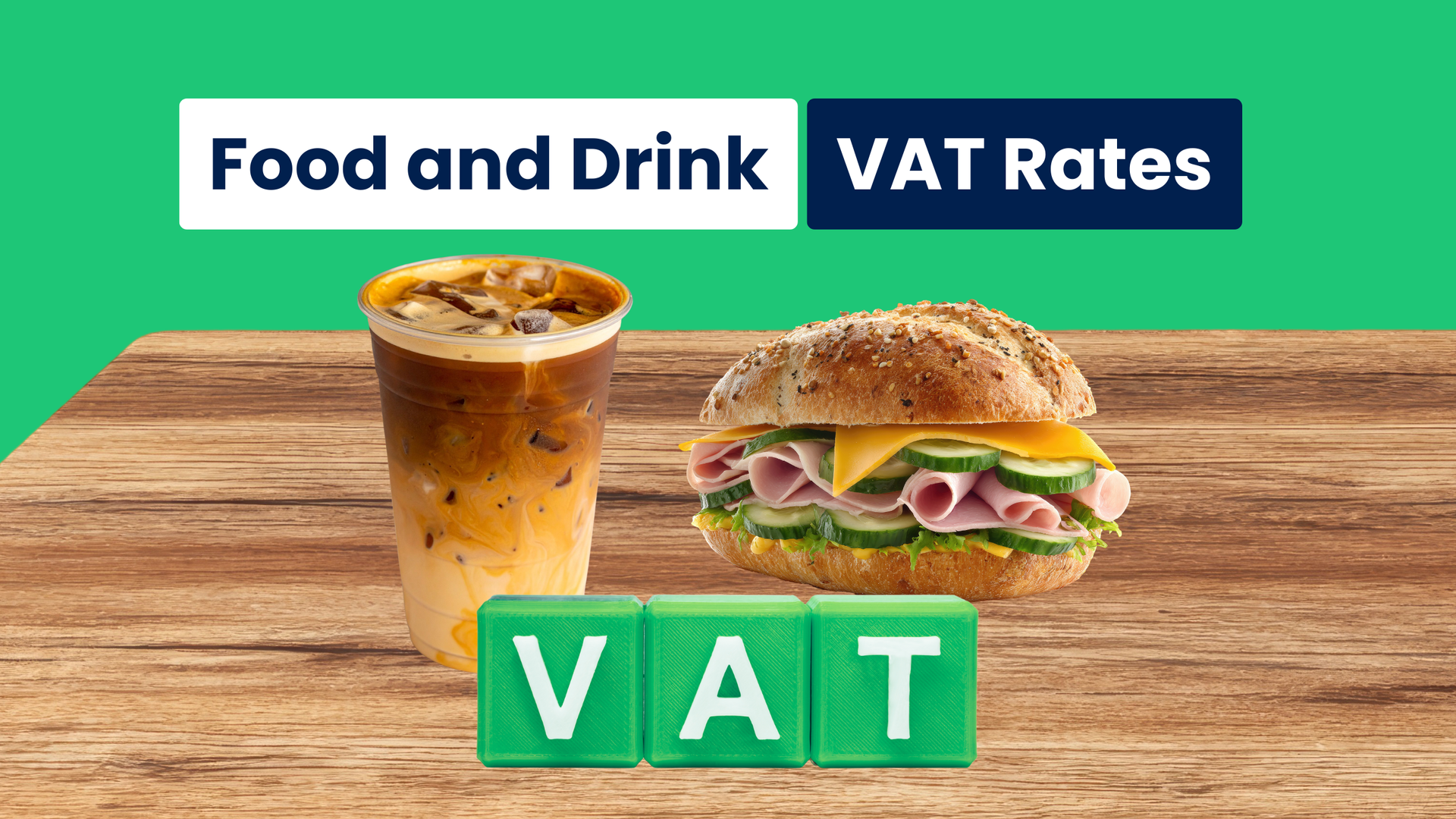

Food and Drink VAT Rates Explained

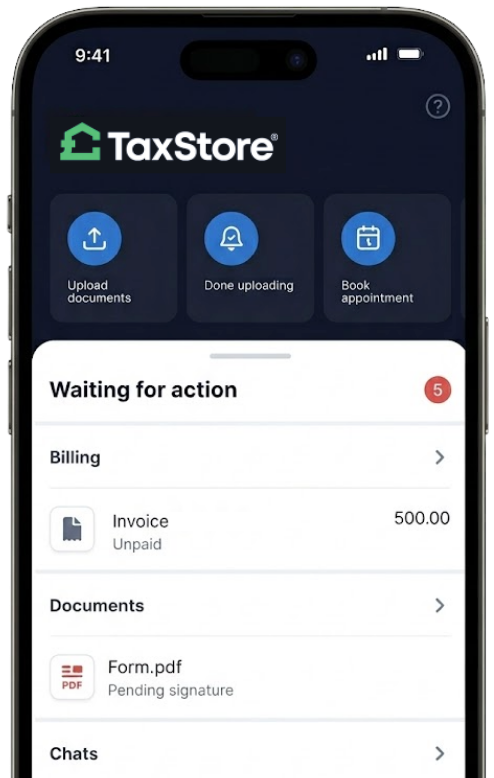
TaxStore® Portal

Securely share records and stay organised for MTD

A smartphone displaying the TaxStore app dashboard, showing
    A person with short hair and light stubble looking directly at the camera against a circular, bright green background.

    Written by:

    Steven Hillman FCA

    Chartered Accountant

    Updated on:

    14 April 2026

    Food and Drink VAT Rates Explained: Guide for Businesses

    Understanding VAT on food and drink can feel complicated, but getting it right matters for your business compliance and pricing. Whether you run a café, restaurant, or takeaway, the VAT rate you charge depends on how and where customers consume what they purchase from you.

    Most cold food taken away is zero-rated at 0%, unless it falls into specific categories that are always standard-rated, whilst hot food, drinks, and food consumed on your premises is treated as catering and is subject to the standard rate of 20% VAT. The distinction between eat-in and takeaway affects VAT rates  significantly, which is why understanding these rules helps you charge correctly and avoid issues with HMRC. Temperature, packaging, and customer location all influence which rate applies.

    This guide breaks down the  VAT rates, exemptions, and specific rules  that apply to different food and drink scenarios. You'll learn when to charge 0%, when to apply 20%, and how to handle common grey areas that catch many businesses out.

    Key Takeaways

    • Cold takeaway food is typically zero-rated, whilst hot food and eating in always incur standard 20% VAT
    • The setting where customers consume food determines the VAT rate you must charge
    • Specific products like  ice cream, confectionery, and alcoholic beverages  are always standard-rated regardless of how they're sold

    VAT Rate Categories and Rules for Food and Drink

    The UK applies three main VAT treatments to food and drink: standard-rated at 20%, zero-rated at 0%, and exempt from VAT. Your obligations depend on what you sell, how it's prepared, and where customers consume it.

    Standard-Rated, Zero-Rated, and Exempt Items

    Most food and drink for human consumption qualifies as  zero-rated under UK VAT , meaning you charge 0% VAT rather than the standard 20% rate. However, certain categories always attract standard-rated VAT regardless of how you sell them.

    Standard-rated items include:

    • Alcoholic drinks
    • Confectionery
    • Crisps and savoury snacks
    • Hot food and hot takeaways
    • Ice cream
    • Soft drinks and mineral water
    • Sports drinks
    • Catering services

    Zero-rated items include:

    • Most cold food sold for consumption off-premises
    • Fresh fruit and vegetables
    • Meat and fish
    • Bread and bakery products (excluding confectionery)
    • Milk and dairy products
    • Eggs

    Cold takeaway food remains zero-rated unless you provide designated eating areas for customers.  Understanding VAT classification for cafés and restaurants  becomes crucial when you operate hospitality businesses, as preparation method and consumption location change your VAT obligations.

    Understanding VAT Classification

    Your  VAT classification depends on multiple factors  beyond just the product itself. Temperature can influence VAT treatment, but HMRC also considers how and why the food is prepared and supplied.

    Location of consumption matters significantly. Restaurants must charge standard-rated VAT on everything eaten on their premises or in communal areas they designate for customers, such as shared tables in shopping centres or airport food courts. This applies even to items that would normally be zero-rated.

    Your business type affects which  VAT rules for food and drinks  apply to you. Retailers selling packaged goods typically zero-rate basic food items. Caterers and restaurants face stricter rules because they prepare food for immediate consumption.

    The distinction between catering and retail sales creates particular complexity. Catering always attracts standard-rated VAT, whilst retail food sales may qualify for zero-rating.

    VAT Notices and HMRC Guidance

    HMRC publishes detailed  guidance through official VAT notices  covering specific food categories. VAT Notice 701/14 addresses general food and drink, explaining which items qualify for zero-rating and which don't.

    VAT Notice 709/1 covers catering and takeaway food specifically. This notice clarifies when you must charge standard-rated VAT on prepared food and distinguishes between catering services and retail sales.

    VAT Notice 701/15 deals with animals and animal feed, whilst VAT Notice 701/38 covers plants and seeds. These notices set out conditions you must meet to apply zero-rating to agricultural products. Products packaged as pet food always attract standard-rated VAT regardless of their contents.

    Each notice specifies conditions you must satisfy to apply particular VAT rates. You need to obtain necessary evidence, keep correct records, and ensure your sales meet the precise criteria HMRC sets out for each classification.

    VAT Treatment by Setting: Eat-In, Takeaway, and Catering

    The location where food is consumed and how it's served determines the VAT rate you must charge. Standard-rated supplies at 20% apply to most on-premises consumption and hot takeaway items, whilst cold takeaway food is often zero-rated.

    VAT on Food Consumed On the Premises

    When you supply food and drink for consumption on your premises, you must charge VAT at the standard rate of 20%. The  definition of premises  extends beyond just your restaurant or café interior.

    Your premises include any area you occupy plus designated customer seating areas. This covers pavement tables adjacent to your establishment, food court spaces you share with other retailers, and any chairs or tables you provide outside your shop.

    The 20% rate applies to both hot and cold food when consumed on-site. If you operate in a shopping centre, your premises include your outlet plus any exclusive seating areas and shared food court facilities.

    You need to keep evidence if you apportion sales between eat-in and takeaway. Areas with benches for general public use, such as shopping centre rest seating or public picnic areas that aren't regularly cleaned by retailers, fall outside the premises definition.

    Takeaway VAT: Hot and Cold Items

    Hot takeaway food attracts the standard rate of 20% VAT, whilst cold takeaway items are typically zero-rated. The distinction between hot and cold significantly impacts  VAT rates on food and drink  for your business.

    Food is considered hot if it's heated for your customers, above the ambient air temperature at the time of sale. This includes freshly cooked items, reheated products, and food kept warm for service.

    Cold takeaway food follows standard food product rules. Most cold items such as sandwiches, salads, and cold pastries are zero-rated unless they're specifically excepted items like crisps, sweets, or certain bakery products which are always standard-rated.

    You must determine the liability at the point of sale. If you cannot establish whether cold food will be consumed on or off your premises when selling it, you need satisfactory evidence to support a fair apportionment between the two.

    Catering and Special Event Services

    All  VAT on catering services  is standard-rated at 20%, regardless of whether the food is hot or cold. Catering involves a significant service element beyond simply supplying food.

    Third-party catering for events such as weddings, parties, or conferences is always standard-rated. This includes delivering cooked ready-to-eat meals with or without crockery, and cooking or preparing food at a customer's location.

    Packed lunches supplied as part of an event or function are standard-rated catering supplies. However, if you supply a packed meal separately from accommodation with a distinct charge for off-premises consumption, you can zero-rate it (excluding always standard-rated items).

    Service charges you add are standard-rated, but freely given tips above your total charge have no VAT due. Food requiring significant customer preparation—such as thawing, cooking, or reheating—isn't a catering supply.

    Impact of Heat-Retaining Packaging

    Food may be treated as hot if it is heated, kept warm, or supplied in a way that is intended for it to be consumed hot and attracts the standard rate of 20%. Heat-retaining packaging can be a factor, but it is not the sole test. The packaging test applies even if the food itself wasn't heated.

    Heat-retaining packaging is designed to retain or maintain heat. Foil containers, insulated boxes, and heated display units all qualify as heat-retaining. The test focuses on the packaging's design purpose rather than its actual temperature.

    If you supply cold food in packaging that happens to provide some insulation but wasn't designed specifically to retain heat, this doesn't automatically make it hot. Standard takeaway bags or paper wrapping typically don't constitute heat-retaining packaging.

    You must assess each situation based on whether the packaging's primary purpose is heat retention.  VAT Notice 709/1  provides detailed guidance on these determinations for your business.

    Key Product Types: Alcohol, Soft Drinks, and Controversial Cases

    Alcoholic beverages are always standard-rated, whilst soft drinks face the same 20% VAT treatment despite being non-alcoholic. The  VAT classification  of certain foods like confectionery and hot takeaway items has sparked notable legal disputes and policy debates.

    VAT on Alcoholic and Soft Drinks

    You must charge standard-rated VAT at 20% on all  alcoholic beverages  regardless of where or how you sell them. This applies whether you're selling wine, beer, spirits, or any other drink containing alcohol.

    Soft drinks also carry the standard rate of 20% VAT. This includes carbonated drinks, fruit juices, juice concentrates, sports drinks, and mineral water. The  UK Soft Drinks Industry Levy  is a separate tax from VAT that targets high-sugar beverages.

    Milk and milk drinks, tea, maté, herbal tea, coffee, and cocoa are generally zero-rated when sold as products, but if supplied as part of catering (for example, in a café), they are standard-rated. Preparations of yeast, meat, and egg also qualify for zero-rating.  Tribunal cases examining sports drinks  have helped clarify the boundaries between standard-rated beverages and zero-rated food preparations.

    Confectionery, Snacks, and the Pasty Tax

    You must standard-rate confectionery, with exceptions for cakes and some biscuits. Biscuits wholly or partly covered in chocolate face standard-rated VAT, whilst plain biscuits remain zero-rated.

    Potato crisps and roasted or salted nuts that have been shelled are always standard-rated. You can zero-rate nuts that remain in their shells even if they've been roasted or salted.

    The controversial "pasty tax" requires you to charge 20% VAT on hot takeaway food. If food is hot when you sell it for takeaway consumption, it's standard-rated regardless of the product type. Cold food prepared for takeaway, such as sandwiches, remains zero-rated unless supplied as part of catering services.

    Ice cream, similar frozen products, and mixes for making them carry the standard rate. Some frozen products may be zero-rated depending on how they are supplied, though this can be a complex area.

    Meal Deals and Bundled Food Items

    When you sell multiple items together in a meal deal, you need to determine whether it's a single supply or multiple supplies. If you're supplying items as part of catering, the entire bundle is standard-rated.

    For retail meal deals containing both zero-rated and standard-rated items, you must apply the correct VAT treatment to each component. A meal deal with a sandwich (zero-rated), crisps (standard-rated), and a soft drink (standard-rated) requires you to charge VAT on the crisps and drink portions.

    You should apportion the total price between zero-rated and standard-rated elements based on their individual selling prices. In some cases, where items are genuinely sold as a single combined product, the overall VAT treatment may depend on the nature of the supply. However, in most cases, HMRC expects apportionment between different VAT rates.

    Calculating and Reporting VAT on Food and Drink

    Calculating VAT correctly requires understanding which rate applies to each item, how to handle mixed supplies, and maintaining proper records for HMRC compliance.

    How to Calculate VAT

    To calculate VAT on food items, you must first determine the applicable rate. Standard-rated items at 20% require you to multiply the net price by 0.20 to find the VAT amount, or multiply by 1.20 to get the gross price including VAT.

    For zero-rated food and drink, no VAT calculation is needed as the rate is 0%. However, you must still record these transactions on your VAT return.

    When  understanding how to calculate VAT on food and drinks , you should apply the appropriate rate based on the item type and how it's supplied. A hot takeaway at 20% VAT on a £10 net price would be £10 × 1.20 = £12 gross, with £2 VAT due to HMRC.

    Apportioning VAT on Mixed Supplies

    Mixed supplies containing both zero-rated and standard-rated items require careful apportionment. You must calculate VAT separately for each component based on its individual classification.

    For meal deals or bundled offerings, examine each item individually. A sandwich (zero-rated), crisps (standard-rated), and soft drink (standard-rated) sold together need separate  VAT calculations for each component.

    You should maintain detailed breakdowns showing how you've allocated prices across different VAT rates. This documentation proves essential during HMRC inspections and ensures accurate reporting on your returns.

    Registration and Record-Keeping Requirements

    You must register for VAT when your taxable turnover exceeds £90,000 in a rolling 12-month period. Once registered, you need to maintain comprehensive records of all transactions for at least six years.

    Your records should include sales invoices, purchase receipts, and detailed breakdowns of  VAT rates applied to different food and drink items. You must file VAT returns quarterly, typically within one month and seven days of each period's end.

    Keep separate records for zero-rated, standard-rated, and exempt supplies. Digital record-keeping through Making Tax Digital-compliant software is now mandatory for most VAT-registered businesses.

    Recent Tax Hub Articles

    A lady in a blue poloshirt with a taxstore icon
    by Steven Hillman 17 April 2026
    Guide to Making Tax Digital: UK Income Tax Essentials Explained
    A person smiles while holding a spirit level against a green background with text reading
    by Steven Hillman 26 March 2026
    Should You Use the VAT Flat Rate Scheme? The VAT Flat Rate Scheme (FRS) is designed to make VAT simpler. Instead of working out VAT on every sale and purchase, you pay a fixed percentage of your turnover to HMRC. For some businesses, that can save time and even reduce the amount of VAT paid. For others, it can end up costing more. Whether it works for you depends on how your business operates, particularly how much you spend and what you spend it on. What is the VAT Flat Rate Scheme? Under the Flat Rate Scheme, you still charge your customers VAT in the normal way. The difference is how you pay it over to HMRC. Instead of calculating VAT on each transaction, you apply a fixed percentage to your VAT-inclusive turnover . That percentage is set by HMRC and depends on your type of business. The idea is simple: Less admin Fewer calculations More predictable VAT payments Who can use the scheme? You can join the scheme if: Your expected VAT taxable turnover is £150,000 or less (excluding VAT) You’ll need to leave if: Your total turnover exceeds £230,000 (including VAT) You also need to be VAT registered, and some businesses (such as those in VAT groups) cannot use the scheme. How it works in practice You take your total sales including VAT , and apply your flat rate percentage. For example: If your flat rate is 14.5% and your VAT-inclusive turnover is £10,000: You pay £1,450 to HMRC You don’t reclaim VAT on most purchases, which is where the trade-off comes in. The only exception is: Capital assets over £2,000 (including VAT) When the scheme works well The Flat Rate Scheme tends to suit businesses that: Have low costs Don’t spend much on VATable purchases Are mainly service-based Examples include: Consultants Freelancers IT contractors In these cases, the flat rate can work out lower than standard VAT accounting. When it doesn’t work The scheme is often less suitable if: You have high expenses You regularly incur VAT on purchases You sell zero-rated or exempt goods Because you can’t reclaim VAT in most cases, you may end up paying more overall. Limited cost trader rules This is where many people get caught out. If your business has very low costs, HMRC may class you as a limited cost trader . If that applies: You must use a flat rate of 16.5% This removes most of the benefit of the scheme. You’re likely to fall into this category if: Your goods cost less than 2% of turnover , or Less than £1,000 per year The benefits The main advantages are: Simpler VAT calculations Less admin and bookkeeping More predictable VAT payments 1% discount in your first year For the right business, it can be a good fit. The downsides The main drawbacks: You can’t reclaim VAT on most purchases You may pay more VAT overall Limited cost trader rules can remove the benefit This is why it’s important to run the numbers before deciding. Making Tax Digital still applies Even if you use the Flat Rate Scheme, you still need to: Keep digital records Submit VAT returns using compatible software The scheme simplifies the calculation, but it doesn’t remove your compliance obligations. Should you use the Flat Rate Scheme? There’s no one-size-fits-all answer. It works well for: Low-cost, service-based businesses It’s usually less suitable for: Businesses with high expenses Businesses that reclaim a lot of VAT The best approach is to compare: VAT under the Flat Rate Scheme vs VAT under standard accounting Final thoughts The Flat Rate Scheme can be a useful tool, but it’s not always the cheaper option. It’s designed to simplify VAT, not necessarily reduce it. Before joining, it’s worth reviewing your numbers properly to make sure it actually benefits your business.
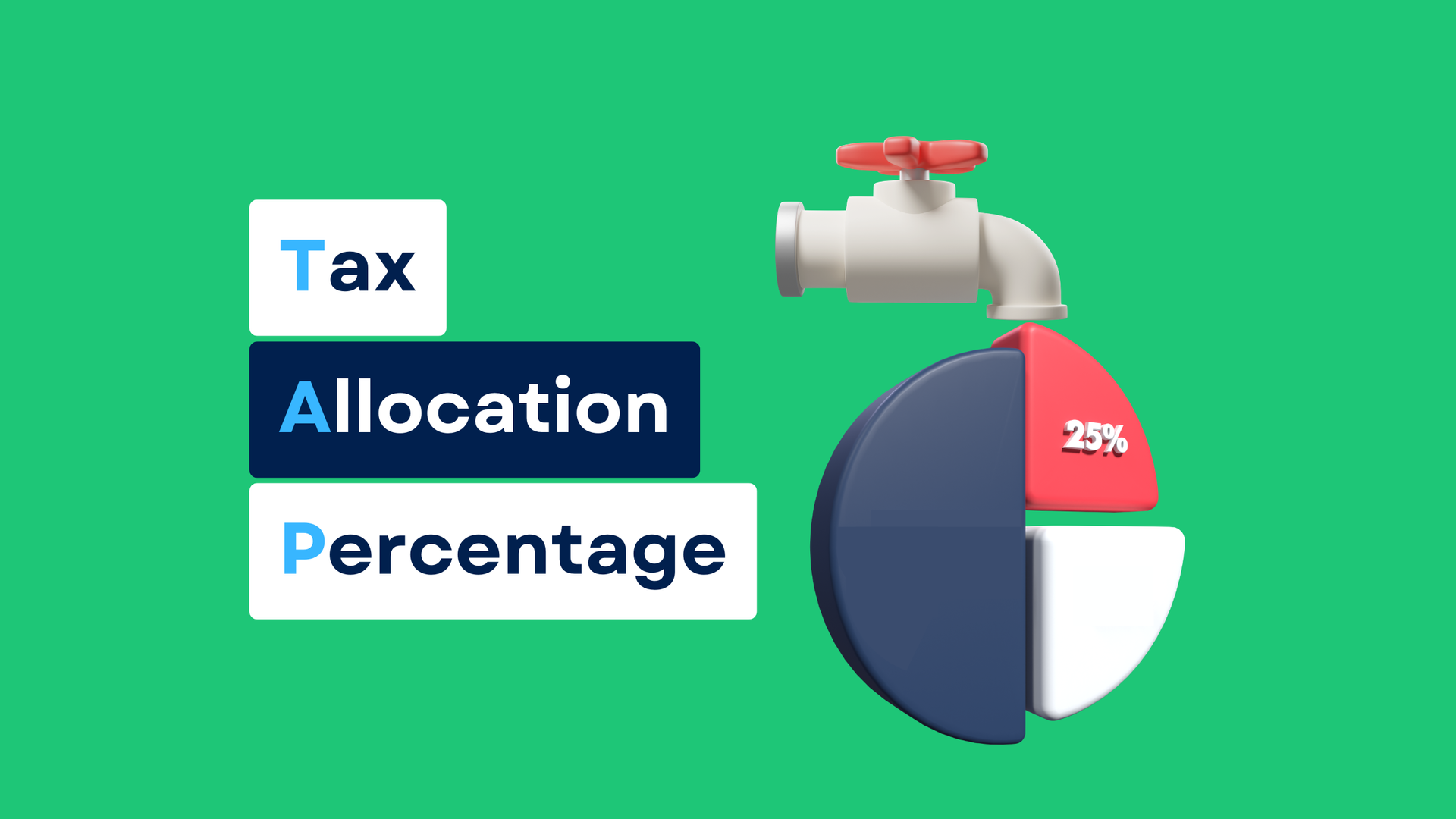
    A water faucet dripping into a pie chart with a red segment labeled 25%, next to the text
    by Steven Hillman 16 March 2026
    Unsure about how much to save for tax in the UK? Discover the ideal percentage to set aside using the Tax Allocation Percentage (TAP) system, specifically designed to simplify tax savings. Written by a Chartered Accountant, this guide gives you a straightforward approach to managing your tax obligations effectively. Don't miss out on these essential tips for UK business owners and side hustlers.
    A modern garden office with a desk and chair, framed by potted plants, featuring the text
    by Steven Hillman 3 March 2026
    Unlock the tax-saving potential of your home office with our comprehensive guide. Learn about the flat-rate and actual costs methods, as well as tax implications of garden offices. Ideal for freelancers, side hustlers and company directors.
    A smiling person wearing a yellow shirt holds a bag of money against a green background, with the text:
    by Steven Hillman 3 March 2026
    Do You Need a Business Bank Account for Your Business? If your business is starting to bring in money, one of the questions that often comes up is whether you need a separate business bank account. The short answer is no, not always. If you are a sole trader, there is no general legal requirement to have a dedicated business bank account. However, that does not mean using a personal account is always the best option. In practice, keeping your business finances separate usually makes life much easier. Is it a legal requirement? For sole traders, a separate business bank account is generally not a legal requirement. Your business and personal finances are legally the same person, even if it is better to keep them apart in practice. For limited companies, the position is different. Because the company is a separate legal entity, it should have its own bank account. So if you are trading through a limited company, a separate business account is really essential. If you are a sole trader, it is more about organisation, clarity and professionalism. Why a separate account usually makes sense The biggest advantage of a separate business bank account is that it keeps your records cleaner. When business income and expenses are mixed in with your personal spending, it becomes much harder to see what is really going on. That can make bookkeeping more time-consuming and can also increase the risk of things being missed when it comes to preparing your accounts or tax return. A separate account makes it easier to: track business income and costs keep proper records reconcile transactions prepare accounts and tax returns more efficiently If you are using accounting software, it also makes bank feeds and reconciliations much more straightforward. Can you use a personal account? Many people do use a personal account when they first start out, particularly if the business is small and there are only a few transactions each month. That said, some banks do not allow personal accounts to be used for business purposes under their terms and conditions. Even where this is not actively enforced, it can become a problem as the business grows. In other words, you may be able to use your personal account at the beginning, but it often becomes less practical over time. Other benefits of a business account A business account can also help your business feel more established. For example, it can: make payments and receipts look more professional help if you later apply for finance give you access to business banking tools and features make it easier to separate money set aside for tax It is not just about compliance. It is about making your finances easier to manage as the business grows. Choosing the right type of bank There is no single right answer when it comes to choosing a bank. Some business owners prefer a traditional high street bank, particularly if they value branch access or want to keep everything with one provider. Others prefer digital banks because they are often quicker to open, easier to manage through an app and more closely integrated with accounting software. What matters most is finding an account that is easy to use and suits the way you run your business. How easy is it to open one? Opening a business bank account is usually quite straightforward, although the exact process depends on the bank and whether you are a sole trader or a limited company. In most cases, you will need: proof of identity proof of address basic details about your business expected income or turnover company documents if you trade through a limited company Many providers now allow you to apply fully online. What about FSCS protection? In the UK, most banks, building societies and credit unions authorised by the Prudential Regulation Authority are covered by the Financial Services Compensation Scheme. FSCS protection for deposits is up to £120,000 per eligible person, per authorised firm. If you hold larger balances, it may be worth checking whether your money is spread across different banking licences. So, do you actually need one? If you are a sole trader, not necessarily. But if your business is growing, generating regular income, or starting to feel more established, opening a separate business bank account is usually a sensible move. It will not change your tax bill, but it can make your bookkeeping, tax reporting and overall financial management much easier. Final thoughts A business bank account is not always a legal requirement, but it is often a practical one. At the very start, using a personal account may seem easier. Over time, though, a separate account usually gives you much better control and makes it easier to stay organised. If your business is becoming more serious, it is often worth treating it that way financially too.
    A person in a pink cardigan whispers while pointing toward text that reads:
    by Steven Hillman 1 February 2026
    Discover effective strategies to reduce your tax bill in the UK with our comprehensive guide. Learn about incorporating businesses, maximising allowable expenses, and leveraging pension schemes. Ideal for self-employed workers and small business owners seeking practical tax-saving tips. Stay informed and manage your taxes efficiently with our expert advice. Read now for savvy tax solutions.
    A person smiles and gives a thumbs-up while holding a stack of colorful sticky notes labeled
    by Steven Hillman 23 July 2025
    Explore the benefits of simplified expenses for UK small business owners and self-employed individuals. Our article breaks down HMRC's flat-rate system, providing clear, practical advice on managing work-from-home, vehicle, and premises expenses. Ideal for those looking to streamline tax calculations and save time.
    A person looks surprised while holding a very long receipt against a green background with text: How To Claim Expenses.
    by Steven Hillman 21 July 2025
    Discover the essentials of claiming business expenses in the UK with our comprehensive guide. Learn which costs are tax-deductible, how to maximise your claims, differentiate between allowable and non-allowable expenses, and navigate the complexities of Self Assessment with ease. Perfect for self-employed individuals.

    Disclaimer: This blog is for general purpose guidance, and no liability is accepted by TaxStore for action taken or not taken in reliance upon the contents of this blog. Where appropriate, professional advice should be obtained.

    🔒 Get more with TaxStore.


    As a TaxStore client, you get access to:


    ✔ A dedicated team of chartered accountants to support you
    ✔ Step-by-step guides and checklists
    ✔ Tools and calculators
    ✔ Secure document sharing and approvals


    All in one place. Online and in-store.